The State of Publishing 2026

What’s Shifting, What’s Cracking, and Where the Real Opportunities Are

Every year, someone declares that publishing is “broken.” Yet every year, authors still want to publish.

More than one thing can be true. 

When we hosted our State of Publishing 2026 expert panel, I wasn’t interested in another round of trend-chasing or fear-based forecasting. I wanted a grounded conversation about what’s actually changing, what’s quietly eroding, and where authors and publishing professionals still have agency.

Because here’s the truth: the rules are shifting, but the game is far from over.

If anything, it’s becoming clearer who publishing works for, and who needs to rethink how they’re playing. Special thanks to my wondrous panelists—Danica Fovorite, Elizabeth Ann West, and Jenn T. Grace—for making this conversation possible.
Publishing Isn’t Dying. It’s Fragmenting.

One of the strongest through-lines in this conversation was fragmentation, which is not collapse nor disruption-for-disruption’s sake.

Business models are splintering. Distribution paths are multiplying. Reader attention is more selective than ever. And authors are feeling the strain of trying to “do it all” without a clear strategy.

The systems that used to support authors have thinned out, and what’s replaced them often requires authors to become marketers, publishers, and entrepreneurs all at once.

That expectation gap is real. It’s also unsustainable.

What used to be handled by a handful of well-defined roles is now pushed onto the author, usually without clear guidance on which efforts actually matter.

That’s not a failure of authors. It’s a signal.

Visibility Is No Longer a Bonus. It’s the Infrastructure.

One thing the panelists agreed on quickly: discoverability is no longer something that happens after the book is published. It’s something that must exist before, during, and long after.

And it can’t be built on borrowed platforms alone.

If you don’t have a way to stay in relationship with your audience outside of a single retailer or platform, you’re building on ground you don’t control.

That insight landed hard for a lot of attendees, and rightly so. We’ve trained authors to optimize for algorithms while ignoring ownership. Never underestimate the power of email lists, audio, speaking, and podcast guesting. These are long-form visibility assets that compound over time.

This is where many authors feel overwhelmed, but it’s also where the opportunity lives.

You don’t need to be everywhere, but you do need to be intentional.

AI Is Changing the Workflow, Not the Work Itself

AI came up repeatedly, and not in the breathless way it often does. The panel treated it as a tool, not a replacement.

Used well, it can reduce friction. Used poorly, it amplifies noise.

AI can help with speed and scale, but it can’t make decisions about meaning, audience, or intent. That responsibility still belongs to the author.

That distinction matters.

The authors who will thrive in 2026 aren’t the ones who adopt every new tool first. They’re the ones who understand where automation helps and where human judgment is non-negotiable.

Publishing has always been a meaning-making industry. Technology doesn’t change that. It just tests whether we remember it.

What Authors Are Actually Up Against

One of the quieter themes in the conversation was exhaustion. Not burnout from writing, but burnout from unclear expectations.

Authors are being told to publish faster, promote harder, diversify formats, and build platforms, often without a coherent strategy tying those efforts together.

That’s not a motivation problem. It’s a systems problem.

And it’s why so many smart, capable authors feel like they’re doing everything “right” and still not seeing traction.

That’s where reframing matters.

Let’s Recap: Practical Takeaways for 2026

Here’s what I’d want you to walk away with if you remember nothing else:

  1. Publishing isn’t collapsing, but it is decentralizing. Strategy matters more than pedigree.
  2. Visibility is no longer optional, but it doesn’t require being everywhere. Choose channels that compound.
  3. Platform ownership matters. Build assets you control, not just profiles you rent.
  4. AI can support publishing workflows, but it can’t replace editorial judgment or strategic intent.
  5. Sustainable success comes from alignment, not acceleration. Faster isn’t better if it’s scattered.
  6. Authors don’t need to work harder; they need clearer frameworks for where effort actually pays off.

That’s the work we keep returning to in these panels. Not predictions for their own sake, but clarity.

Each month, we bring together leaders from across the publishing ecosystem to give authors, speakers, and experts real insight into what works in today’s book and visibility landscape.
Join our next live panel – Authority Audio: Building Trust and Business With Audiobooks

Reserve your spot here!

About Tina Dietz:

Tina Dietz is a vocal leadership expert and the founder of Twin Flames Studios, pioneers in voice-powered publishing. Her team has produced over 500 audiobooks and podcast-to-book projects, including multiple award winners, bestsellers, and titles featured on major media platforms.
Recognized by Forbes, Inc., ABC, and The Chicago Tribune, Tina and her team craft audiobooks that move people and transform podcasts into books that open doors. Their signature VoiceCraft™ and PodCraft™ Methods help experts, entrepreneurs, and thought leaders turn their voices into platforms for visibility, trust, and lasting impact.
The Art and Science of Book Cover Design

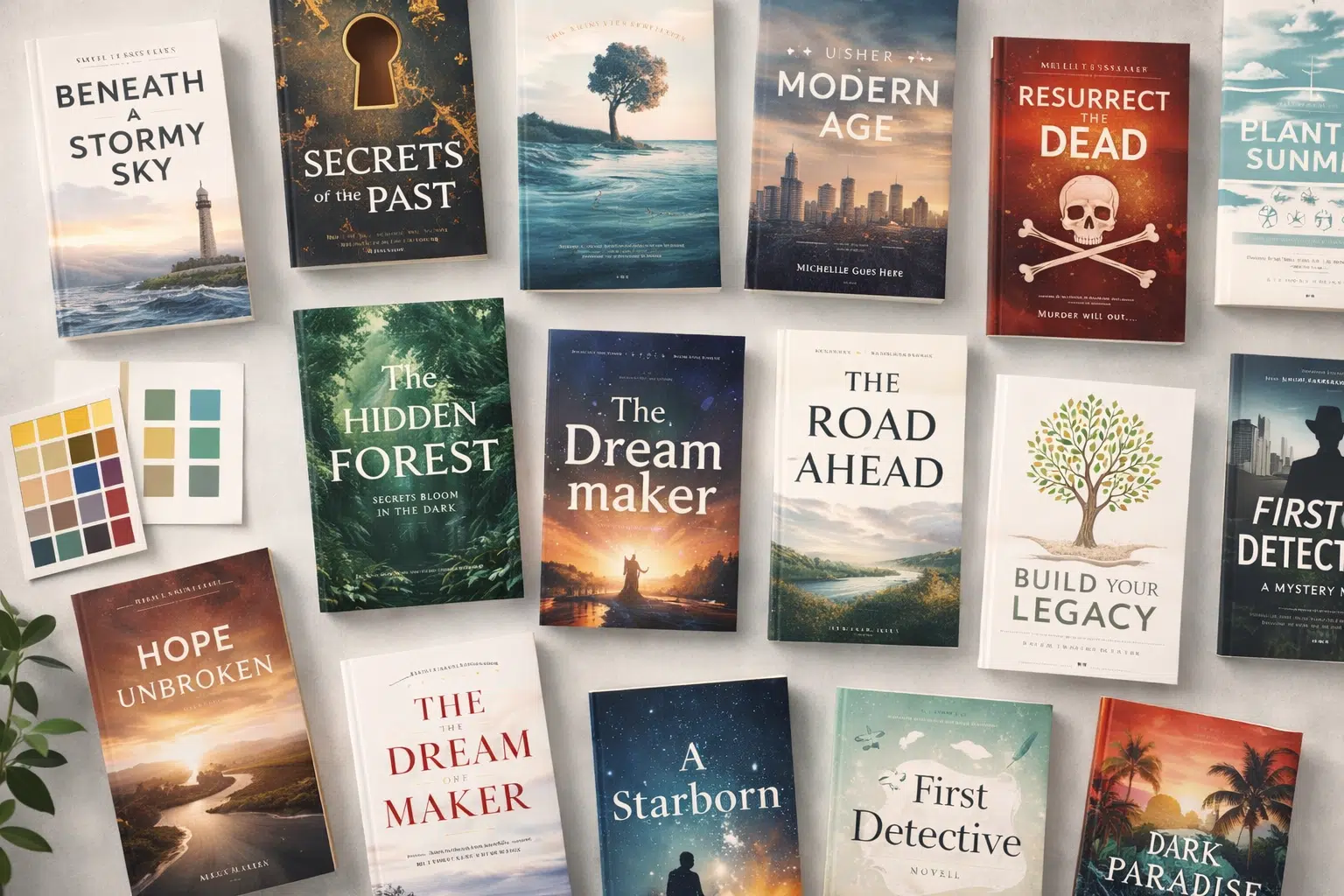
The Art and Science of Book Cover Design: What Really Makes Readers Stop, Look, and Choose Your Book

A book cover is more than packaging. It’s a visual handshake. It’s the promise your book makes before a reader ever sees a single sentence. And as I often remind the authors and publishers who join our monthly panels, we all judge books by their covers. We’re human. We respond to images before ideas.

In November’s Twin Flames Studios expert panel, we brought together three extraordinary voices in book cover design—Claudine Mansour, Maureen Forys, and Sean Qualls—to talk about the art and strategy behind covers that actually sell. What emerged was a conversation about emotion, clarity, competition, and the quiet power of good typography. It was also a reminder that design is not decoration. Design is communication.

And authors deserve covers that communicate well. Read on to discover the insights, quotes, and practical guidance that stood out the most.

Why Covers Matter More Than Ever

The first thing we asked our panelists was simple: Why does a book cover matter so much today?

Maureen answered without hesitation.

“If you don't have a strong cover, you're not going to be seen, especially if you're an independent author.”

The digital bookshelf isn’t just crowded; it’s noisy. Readers scroll fast, attention is scarce, and an unremarkable cover is essentially camouflage. Claudine expanded the point:

“People these days are inundated with graphic design. If you have a weak book cover, then your marketing ain't gonna be that great either.”

Readers don’t owe us their attention. A cover earns it.

And it earns something else too: trust.

When your typography, imagery, and tone all align, readers can sense professionalism before reading a single word. That’s the quiet power of design operating on our instincts.

What Readers Respond to (Even If They Can’t Explain Why)

When asked what visual cues tend to attract people, the panelists agreed on one theme: emotion.

Sean put it beautifully:

“There's something very universal about beauty. It grabs us. That emotional response is key.”

This matters because authors often try to communicate everything on the cover. A whole plot. A full argument. Their life story. Their symbolism.

But readers don’t buy complexity. They buy clarity.

And often, clarity begins with type.

Maureen reminded us that typography is not just the font you choose. It’s the emotional tone of your title. The kerning. The spacing. The weight.

“It needs to be readable from a distance and somehow surprising.”

Claudine added the grounding point at the heart of every great design decision:

“We need to make some sort of connection with the audience. It’s almost always an emotional connection.”

This is how covers work. Feeling first, comprehension second.

How Authors Can Prepare Before Working With a Designer

Here’s the part authors often skip, but shouldn’t.

Before you hand your manuscript to a designer or illustrator, prepare your foundation:

  • Know your title
  • Know your audience
  • Know your competition
  • Know your category

Claudine emphasized this with one of my favorite metaphors from the entire panel:

“Designing a book cover is like going to a party. You want to know what the guest list is. You want to know who your competition is.”

If you don’t know the party you’re walking into, you can’t stand out for the right reasons. And as she noted, many first-time authors skip this step entirely.
Maureen also shared that authors rarely come equipped with the vocabulary of design, which is perfectly normal. What helps instead is showing, not telling.

 She said she often asks authors to go onto Amazon or into a bookstore:

“Tell me what you like and what you don’t like. What speaks to you?”

Designers don’t need you to speak their language.
They need you to speak your taste.

The Dance Between Illustration and Graphic Design

A lot of authors aren’t sure whether they need an illustrator, a designer, or both.
Sean, who has illustrated many well-known covers, offered guidance from his side of the creative table:

“There’s a narrative quality. When you're trying to convey something about the character and their identity, an illustration can do that really well.”

In other words, illustration is most effective when the cover needs personality or story.

For concept-driven nonfiction or business books, typography can often carry the weight. For memoirs or identity-driven work, illustration may open the emotional door.

Both are valid. Both are powerful. What matters is intention.

The Question Everyone Wants to Ask: Should You Put Your Face on a Memoir?

This came up in the live Q&A, and the answer is the designer’s favorite truth: it depends.Sean offered almost deceivingly simple criteria:

“Is it a good photo?”

Maureen added nuance. Yes, author photos are common, but should they dominate the entire cover? Not always. And I reminded the group that the deeper question is not about ego, but impact:
Is this the emotional doorway that invites the reader in?

That’s the real test.

The Trends Heading Into 2026

We asked the panel what they’re seeing in the market, and three themes emerged:

1. More AI-generated art.
Not always good. Not always bad. But unavoidable. Maureen noted the rapid increase since summer 2024.

2. Busier, more layered covers.
Sean shared that he’s seen more covers with a lot of things going on visually.

3. Type-only covers (especially in nonfiction).
All three agreed: type-only covers can be stunning when executed well.
But as Claudine said, “Is it appropriate? Does it fit in? Does it give the right message?”

Typography is never neutral.
It either supports your message or competes with it.

Let’s Recap: Six Key Takeaways for Choosing Your Path

Here are the biggest lessons from our panel, distilled into clear, actionable guidance:

  1. Do your competitive research before choosing a cover concept.
    Know the “party” you’re walking into.
  2. Collect visual references, not explanations.
    Designers can translate taste, not telepathy.
  3. Typography matters more than you think.
    It sets tone, clarity, and emotional impact before anything else.
  4. Illustration is powerful when identity or narrative drives the book.
    For concept-driven nonfiction, strong type often wins.
  5. Symbolism only works when it communicates beyond your own mind.
    If only you understand the metaphor, it’s not a metaphor.
  6. Your cover doesn’t tell the whole story.
    It invites the reader into the first chapter of your world.

Each month, we bring together leaders from across the publishing ecosystem to give authors, speakers, and experts real insight into what works in today’s book and visibility landscape.
Join our next live panel on Ghostwriting (with a Dickensian twist)

👉 Reserve your spot here

About Tina Dietz:

Tina Dietz is a vocal leadership expert and the founder of Twin Flames Studios, pioneers in voice-powered publishing. Her team has produced over 500 audiobooks and podcast-to-book projects, including multiple award winners, bestsellers, and titles featured on major media platforms.
Recognized by Forbes, Inc., ABC, and The Chicago Tribune, Tina and her team craft audiobooks that move people and transform podcasts into books that open doors. Their signature VoiceCraft™ and PodCraft™ Methods help experts, entrepreneurs, and thought leaders turn their voices into platforms for visibility, trust, and lasting impact.
7 Smart Ways to Sell More Books During the Holidays (Without Losing Your Mind)

Holiday book marketing shouldn’t require caffeine-fueled heroics, emotional fortitude, or a whiteboard covered in red string. It only needs a handful of smart moves that work with how people actually behave this time of year.

Because December has two modes.
1. Delight
2. Chaos

Books thrive in both.

Here are seven quick-win tips to help your book (and audiobook) shine this season, minus the stress.

Tip 1: Make “Gift the Book” the Easiest Yes of the Season

Most holiday shoppers aren’t reinventing the wheel. They're trying to get through their lists with dignity intact. Books are the perfect “I care, but I also have twelve other things happening” gift.

Post a simple reminder that your book makes an excellent holiday gift for colleagues, clients, and that one friend who always sends immaculate cards but never answers texts.

Short. Friendly. Helpful.

Ease is your competitive advantage.

Tip 2: Create a Bundle That Feels Like Holiday Magic

People love bundles. They turn indecision into action. As an author, your job is to make someone think, “Oh good. This solves something.”

If you have multiple books, bundle them with a theme.
If you have one book, pair it with a small bonus you already have.

Make your bundle feel like the shortcut people didn’t know they needed. Holiday shoppers love shortcuts almost as much as they love cookies.

Almost.

Tip 3: Help Leaders Look Brilliant With Bulk Gifts

Leaders want to give thoughtful gifts. They do not want to assemble them.

Reach out before mid-December and offer a limited-time bulk order option. Make it simple. Make it personal. Include your audiobook as a choice because listening is the one thing people can do while avoiding eye contact at holiday gatherings.

A good bulk-gift offer turns you into the hero they didn’t expect but are grateful for.

Tip 4: Run a “12 Days of Tips” Series That Builds Momentum

Twelve tiny takeaways from your book. Twelve days.
This builds visibility and value at the same time.

Think of it as the world’s easiest countdown calendar. Every tip reminds your audience why they’re glad you wrote this book. At the end, nudge them gently that the book (and audiobook) makes a great gift.

Consistency is its own holiday miracle.

Tip 5: Embrace the Last-Minute Shoppers With Digital Gifts

Around December 20, shipping becomes a gamble.

People panic.
People surrender.
People turn to ebooks and audiobooks.

Use this moment. Remind your audience that digital gifts arrive instantly and risk-free. It is the ultimate solution for anyone who suddenly remembers their Secret Santa is tomorrow.

Put their mind at ease. They will remember you saved the day.

Tip 6: Turn Your Audiobook Into a Gift People Can Use Immediately

Audiobooks perform exceptionally well during the holidays because they meet people exactly where they are. They travel. They take long walks to recover from family time. They organize the house, again. An audiobook turns all of that into learning or inspiration.

Share a brief audio clip on social media. Offer a two-minute moment from your book that gives clarity or momentum. Nonfiction listeners love a practical edge.

One small audio sample can lead directly to full audiobook sales.

Tip 7: Use the Quiet Week to Invite People Into the New Year

The lull between Christmas and New Year’s is a gift. People have gift cards. They are reflective. They want to start strong.

Invite them to join a small January book club or guided walkthrough. Keep it low-lift. Friendly. Encouraging. Ask for proof of purchase with a smile.

When someone chooses your book as their first step into the year, they often stay with you much longer.

Wrapping It Up (see what I did there?)

Readers make thoughtful choices during the holidays. Your job is simply to show up with clarity, consistency, and something that genuinely supports their goals.

A good strategy is never about doing more.
It’s about doing what matters.

If stepping into audio is on your radar for the year ahead, let’s explore how an audiobook or podcast-to-published book process can support your goals in a practical, strategic way.

Happy Holidays!

If stepping into audio is on your radar for the year ahead, let’s explore how an audiobook or podcast-to-published book process can support your goals in a practical, strategic way. Let's Talk.

About Tina Dietz:

Tina Dietz is a vocal leadership expert and the founder of Twin Flames Studios, pioneers in voice-powered publishing. Her team has produced over 500 audiobooks and podcast-to-book projects, including multiple award winners, bestsellers, and titles featured on major media platforms.
Recognized by Forbes, Inc., ABC, and The Chicago Tribune, Tina and her team craft audiobooks that move people and transform podcasts into books that open doors. Their signature VoiceCraft™ and PodCraft™ Methods help experts, entrepreneurs, and thought leaders turn their voices into platforms for visibility, trust, and lasting impact.

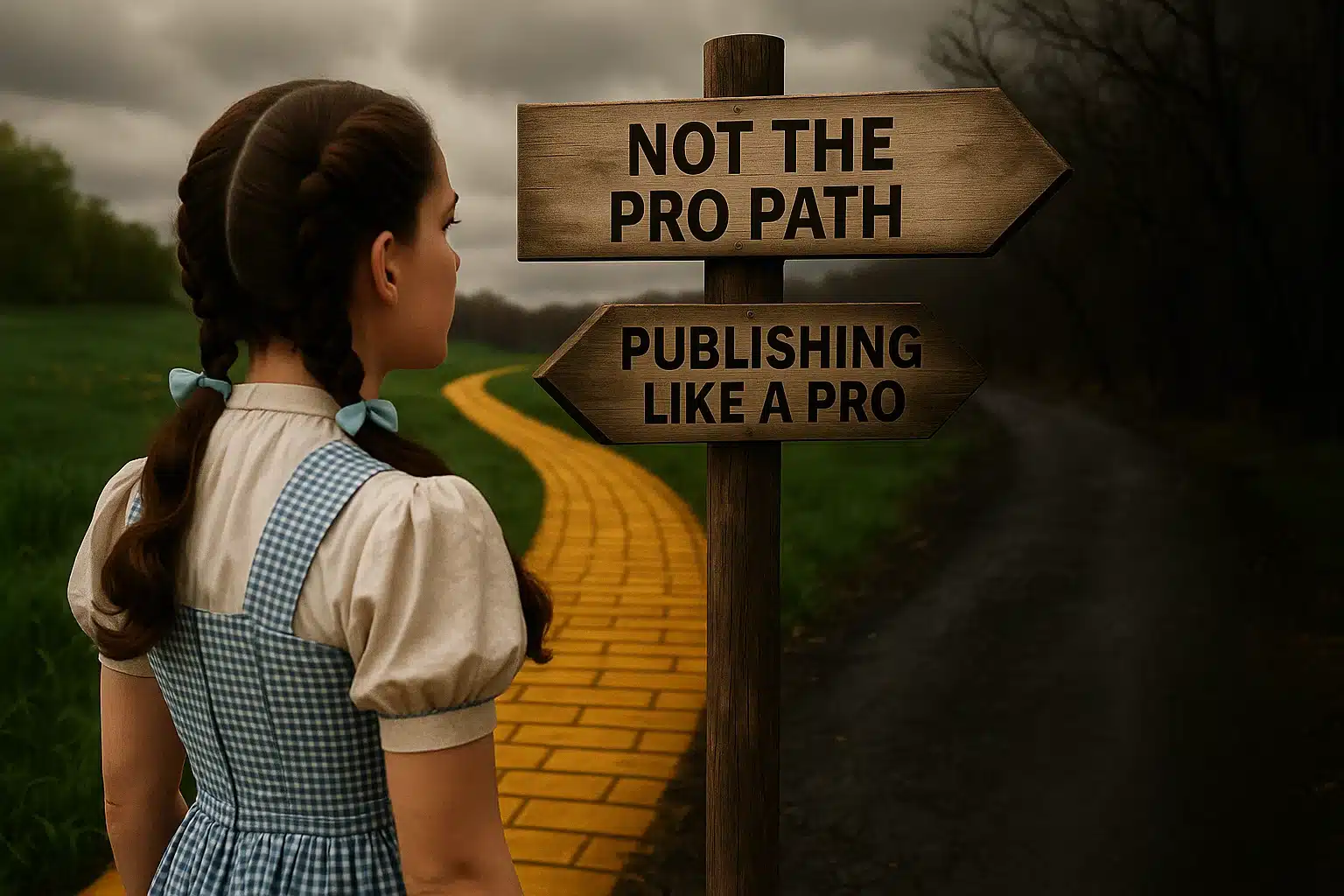
Choose Your Publishing Path Like a Pro: Finding the Right Fit for Your Book

We’re living in a publishing renaissance. Options abound and each one offers its own balance of opportunity, investment, and control.

If choosing your publishing path has ever felt like standing at a crossroads with signs pointing in every direction, you’re not alone. That’s why we hosted this month’s expert panel.

Our panel of experts: Robin Colucci, Will Wolfslau, and Kim Eley, joined me to unpack the real-world pros and cons of traditional, hybrid, and self-publishing. The result was a refreshingly honest conversation about myths, money, and making smart publishing choices.

Traditional Publishing: Strategy Over Ego

“Your publishing path should be a strategic decision, not an ego-driven decision.” — Robin Colucci

Robin, who works almost exclusively with traditionally published authors, reminded us that prestige doesn’t always equal profit. Traditional publishing can open doors, but it comes with trade-offs. Longer timelines, smaller royalties, and less flexibility around rights and creative direction are likely. 

She also challenged a persistent misconception: that traditional publishers strip authors of creative control.

“People say, ‘You’ll give up your creative control,’ but I’ve almost never seen that happen.” — Robin Colucci

The key, she emphasized, is alignment. Traditional publishing makes sense when your goals, platform, and patience match the process. Otherwise, you may be better served by a more agile path.

Hybrid Publishing: Professional Muscle With Author Control

“A top-flight hybrid publisher should give you the same experience as a traditional press.” — Will Wolfslau

Hybrid publishing bridges the gap between full-service and full-DIY. You invest up front but keep your rights and creative authority. Will described it as a model that “balances the power toward the author.” In most hybrid arrangements, authors earn the majority of royalties and maintain final approval on decisions.

But hybrid publishing still requires a business mindset.

“Nobody should take out a bank loan to finance a book. It’s an uncertain business venture. But if you see it as part of your broader strategy, it can elevate your brand exponentially.” — Will Wolfslau

In short: treat your book like a strategic asset, not a vanity project. Expect mid-five-figure investments when you hire professionals for editing, design, distribution, and marketing. Or as Will put it, “Find the right partner and hire a team.”

Assisted Self-Publishing: Guidance Without Gatekeepers

“Nobody wants a book that looks bad or reads badly. You need a professional team, even if you’re self-publishing.” — Kim Eley

Kim refers to her approach as guided self-publishing. It’s ideal for authors who want to steer the ship but recognize that expertise matters, especially when it comes to editing and design.

“I don’t want to hear, ‘My next-door neighbor is a kindergarten teacher; she’s a great editor.’ No. You want somebody who will, with kindness, tell it like it is.” — Kim Eley

In other words, when you’re clear on your purpose, your audience, and what success looks like beyond the book launch, then making the choice of the right publishing path is a lot easier and more obvious.

Mindset Matters Most

A throughline in every successful publishing story? Humility and focus. Authors who approach publishing as a learning process, rather than a trophy hunt, tend to thrive.

“Your book isn’t for you. It’s for your reader.” — Robin Colucci

That one sentence reframes everything: from how you write and edit, to how you design your cover and market your message.
Kim offered a beautiful reminder:


“You were called to write this book for a reason. Follow that passion, follow that itch, that call that made you want to write in the first place.” — Kim Eley

Let’s Recap: Six Key Takeaways for Choosing Your Path

  1. Decide strategically, not emotionally. Your publishing model should serve your goals not your ego.
  2. Budget for value, not vanity. Whether you spend $5,000 or $50,000, align your investment with your long-term vision.
  3. Get professional editing. No exceptions. A good editor protects both your voice and your credibility.
  4. Define success early. Know whether your priority is reach, revenue, or reputation.
  5. Write for your reader. Every decision from structure to marketing flows from understanding who your book is for.
  6. See your book as the beginning, not the end. Publishing isn’t the finish line it’s the launchpad for your next chapter.

Your voice deserves to be heard in every sense of the word. Whether you’re building a legacy, growing your business, or amplifying a message that matters, the right publishing path helps your voice carry further and last longer.

Join us for next month’s expert panel, where we’ll dive into The Art and Science of Book Cover Design, because your story’s first impression deserves as much intention as the words inside.

👉 Reserve your spot here

About Tina Dietz:

Tina Dietz is a vocal leadership expert and the founder of Twin Flames Studios, pioneers in voice-powered publishing. Her team has produced over 500 audiobooks and podcast-to-book projects, including multiple award winners, bestsellers, and titles featured on major media platforms.
Recognized by Forbes, Inc., ABC, and The Chicago Tribune, Tina and her team craft audiobooks that move people and transform podcasts into books that open doors. Their signature VoiceCraft™ and PodCraft™ Methods help experts, entrepreneurs, and thought leaders turn their voices into platforms for visibility, trust, and lasting impact.
The State of AI Audiobooks in 2025

AI voices have never been louder, but audiobook listeners are tuning out.

If you’ve spent any time in the publishing world this year, you’ve heard the chorus: AI audiobooks are faster and cheaper. Platforms are rushing to prove they can build entire audiobooks in hours. Social feeds are full of “before and after” demos that promise perfect performance at the push of a button.

However, as the volume of AI-narrated titles climbs, listener enthusiasm is beginning to flatten. 

According to the Audio Publishers Association, while 19 percent of audiobook listeners have now tried an AI-narrated book, willingness to try one has dropped from 77 percent two years ago to 70 percent today. 

Curiosity is rising; patience is not.

The Audiobook Boom Continues…and It’s Still Mostly Human

The industry itself continues its steady growth. In 2024, audiobook revenue hit 2.22 billion dollars, up 13 percent from the previous year. 2025 initial sales data indicates that audiobook sales may double 2024 revenue numbers by the end of the year. 

Did I just say that the audiobook market may double in 2025? Yes, I did.

Digital formats account for 99 percent of those sales; fiction remains the largest category at roughly two-thirds of the market.

AI-narrated titles are growing fast in number, increasing from about 1,600 in 2023 to more than 40,000 in 2025, but they still represent only about five percent of active titles. Human-voiced audiobooks also expanded in number during that same period, so the overall pie is expanding without changing its flavor.

The biggest retailers have opened their doors to AI production and publishing. Audible offers AI production tools and hundreds of synthetic voices in multiple languages. Spotify accepts AI-narrated titles using licensed voice-software providers. Kobo permits AI narration as long as publishers label the voice as “synthesized.”

For all the talk of revolution, this is more a co-existence. 

AI audiobooks aren’t taking over; they’re tagging along on the growth of the audiobook market that now has spanned more than 15 years of being the fastest growing sector of the publishing world.

Speed and Scale Don’t Equal Storytelling

AI narration is fast and cheap and no one disputes that. A single author can feed a script to a platform and hear a finished file before lunch. For creators who have an eye on their wallets, the temptation is obvious.

But production time and listener connection quality are two different metrics.

Human narration succeeds because listeners feel it breathe. Literally. 

Software has still not cracked the code of putting human breath into audio. 

AI voices also struggle with intonation, humor, and context; AI platforms don’t yet allow for editing and fine tuning in these areas. As a result, AI audiobooks typically sound flat and slightly “off,” like the verbal equivalent of a portrait that looks almost real until you see the eyes. 

Some listeners describe the experience as “irritating, like someone scratching the inside of my brain.” That’s the uncanny valley effect for the ear, and we haven’t crossed it yet.

AI can read a book, but it still can’t tell a story.

Inside the Voice: A Tale of Two Narrations

In our first edition of this AI Audiobook report in 2024, we introduced you to Paul Stefano, one of our Senior Audiobook Directors and a seasoned narrator with more than 125 titles to his credit. 

Paul worked with a credible voice cloning/AI company and decided to license his voice for an AI audiobook experiment, and we published the results.

One year later, has the technology changed?

Listen to the samples below of the same passage of the same book: Dolly on Dolly: Interviews and Encounters with Dolly Parton 

AI Cloned Voice of Narrator

Professionally Human Narrated Sample

What did you notice about the differences between the two? Would you listen to an entire 6-8 hour audiobook of the AI voice, now that you hear the difference that a human performance makes possible?

The proof is also in the sales numbers. To date, Paul has licensed his voice for 29 AI titles.

The results are that 14 of those titles have NO sales, and across all 29 titles, only 140 audiobooks have sold.

Given the massive growth of audiobook sales I shared with you earlier, these sales numbers don’t track, leading us to one inevitable conclusion…

Technology can copy a voice, but it can’t replicate presence.

The Labeling Era: When AI Has to Say Its Name

Transparency is finally catching up with innovation. The APA now encourages publishers to identify AI voices in their metadata and distinguish between “AI Voice” and “Authorized Voice Replica.” Retailers such as Kobo and Audible are requiring clear disclosure.

This is a healthy shift. It helps consumers make informed choices and protects authors whose voices might otherwise be replicated without context. Authenticity isn’t a liability; it’s brand insurance.

We’ve entered the era where even machines have to introduce themselves.

Beyond English: The Global Temptation

AI translation and multilingual narration are expanding rapidly. Audible and several voice-tech providers now offer dozens of languages for instant conversion. 

It sounds thrilling on paper, but in practice, accuracy is still hit or miss. 

Pronunciations drift, dialects blur, and cultural nuance is often the first casualty. If you’re not a native speaker of the language that you’re translating your book into, you’re taking the risk that your book is saying things you didn’t mean.

We’re investigating accuracy in AI audiobook translations, so leave us a comment if you’re interested in hearing more on that topic.

What Authors and Experts Should Do

The goal here isn’t to avoid AI; it’s to use it wisely and make sure that the quality reflects your brand and your reputation.

  1. Invest in your authentic voice. A professionally produced audiobook still signals quality and credibility. It remains the benchmark for thought leadership.
  2. If you experiment, do it intelligently. Record your author-narrated audiobook first, then use those high quality recordings to train a voice clone for short-form content like blogs or social clips where listening time is brief.
  3. Know your audience. Convenience won’t save a bad experience. When your listeners notice the voice is synthetic and stop listening, the savings don’t matter and your brand gets damaged as a result. To keep the attention of your audience, you need to be worth listening to.
  4. Understand your actual costs. Remember that AI voice services come with recurring platform fees and vendor lock-in; until audience demand proves sustained, that’s money better spent on quality production and marketing.

The Human Voice Endures

AI audiobooks will continue to improve and they may even become indistinguishable someday. 

But your credibility can’t and won’t wait for AI to catch up.

Listeners still lean in for the human pause, the inflection, the imperfection that feels alive. That’s what turns a recording into a relationship.

AI can speak; only you can be heard.

For Further Reading

Audio Publishers Association (APA)

Platform & Industry Developments

Research & Analysis

What most surprised you, or what do you still want to know? Ask your questions below!

About Tina Dietz:

Tina Dietz is a vocal leadership expert and the founder of Twin Flames Studios, pioneers in voice-powered publishing. Her team has produced over 500 audiobooks and podcast-to-book projects, including multiple award winners, bestsellers, and titles featured on major media platforms.
Recognized by Forbes, Inc., ABC, and The Chicago Tribune, Tina and her team craft audiobooks that move people and transform podcasts into books that open doors. Their signature VoiceCraft™ and PodCraft™ Methods help experts, entrepreneurs, and thought leaders turn their voices into platforms for visibility, trust, and lasting impact.

Beyond the Book: How Authors Create Multiple Income Streams 

So you’ve written the book. But the question of “now what?” remains. At our September expert panel, the room was packed with authors asking exactly that. And let’s be honest, we’ve all heard it before: the book is just the beginning.

Here’s the twist: the book isn’t the end of the marathon, it’s mile one. What comes next is where the real opportunity, and sometimes the real overwhelm, begins. That’s why I brought together three powerhouse experts, Keith Leon, Jennifer S. Wilkov, and Alexa Bigwarfe, to help us unpack how to turn a book into a business model that actually generates income.

The #1 Mistake Most Authors Make

Let’s start with the mistake that trips up nearly everyone: writing a book without a plan.

Jennifer Wilkov put it plainly:

“The biggest mistake is that they have no plan. You have to have a business plan and you have to have a revenue generation plan.”

Without a roadmap, you’re stuck in what I call “hope-and-pray publishing.” Hope that the book sells. Pray that something happens next. Spoiler alert, hope is not a strategy.

Alexa Bigwarfe, who has helped hundreds of authors through the publishing maze, backed her up:

“The plan is a critical piece, but thinking about it as an actual business is crucial too.”

Too many writers resist that shift. We love the creative work, but the second we hear “CPA” or “shopping cart,” it feels like someone just told us to eat our vegetables. Yet that business backbone is what makes the creative part sustainable.

And then came Keith Leon with the mic-drop perspective:

“Repurpose, repackage, and have the book already created into multiple programs and products before the book launch even happens.”

Imagine finishing a book launch with a ready-to-go course, a companion journal, and a workshop offering. Your readers are warmed up, wallets open, and instead of leaving them with a single purchase, you’ve invited them into a whole ecosystem. That’s the difference between authors who dabble and authors who thrive.


Where to Start Without Overwhelming Yourself

Of course, hearing about all the things you could do with your book can feel like being dropped into the Costco of publishing: endless aisles, free samples everywhere, and no idea where to start.

Alexa had a simple filter for this:

“Start by thinking about the skill sets that you have and see what the easiest thing to start with is. For instance, if you’re a fantasy author, I wouldn’t recommend you make a course unless you’re a gifted teacher for worldbuilding.”

Translation: don’t try to do everything. Do the next thing that aligns with your strengths. Coaches and consultants? Try a group program. Speakers? Package your workshops. Introverts? Maybe a self-paced online course.

Jennifer added a practical twist:

“What is your natural tendency? Where can you actually pick up another income stream?”

The message was clear: stop chasing trends and start with what feels natural.


The Tools Nobody Tells You About

Now, time for the unglamorous but necessary stuff. What do you actually need to get this machine running?

Keith rattled off some of the basics: Zoom, a way to take payments, a solid microphone, headphones, and camera. Nothing fancy, just professional enough that people trust you.

He also added that mentors are invaluable:

“We can try to do everything ourselves, but people who have already done it can help us with the checklist.”

Meanwhile, Alexa reminded everyone that your most valuable marketing asset isn’t Instagram followers or TikTok views. It’s your email list. 
“Social platforms can change their rules overnight. Your list is yours.”

And Jennifer brought the legal hammer down:

“You have got to make sure that you define who’s doing what. Make sure you legally define the terms of collaboration. I’ve seen partnerships that don’t get this part right. They end up fighting, not being friends… It’s awful.”

Bottom line? Whether it’s tech, marketing, or contracts, skipping the basics will cost you more than investing in them upfront.


Thinking Bigger: Beyond the Usual Suspects

Once you’ve got the foundation, the real fun begins.

  • Audio is booming. Audiobooks outsell e-books three to one in the U.S. I reminded the panel that audio isn’t just an income stream. It’s a marketing tool and audience builder.
  • Film and TV aren’t out of reach. Jennifer emphasized that your book is IP (intellectual property) and that it can be licensed for adaptations. Protect your rights and pitch strategically.
  • Merchandise and swag work. Whether it’s card decks, journals, ornaments, or even coloring books, readers love physical tie-ins. And with print-on-demand, there’s little risk.
  • Book club kits. Create guides, discussion questions, and even themed party ideas. It gives groups a reason to pick your book and stick with you for more.

One of my favorite audience moments? An author of local ghost stories asked if their book could make money beyond speaking. Jennifer suggested looking at ghost tours, Alexa pitched YouTube or podcast tie-ins, and I added: “Yes, and podcasting your stories is a perfect way to build fans who’ll line up for live tours.” Sometimes the niche ideas are the most lucrative.


Let’s Recap: 6 Practical Takeaways

  1. Draft a book ecosystem plan: list your top 3–5 income stream ideas.
  2. Pick one or two strategies that align with your strengths, not what’s trending.
  3. Get your basic tech kit in place: Zoom, mic, camera, payment system.
  4. Build and own your email list. It’s your most valuable marketing tool.
  5. Use clear contracts in collaborations. Don’t skip the boring part.
  6. Once your base is set, test creative add-ons like audiobooks, merchandise, or kits.

Final Thoughts

Your book is source material, not a standalone product. It’s the hub of a wheel, with each spoke — courses, podcasts, merchandise, speaking, film, audio — creating its own stream of income and impact.

📅 Ready for more real-world publishing insights?
So here’s your next step: don’t stop at publishing. Start planning for your ecosystem.

Because your book deserves to do more than sit on a shelf. It deserves to build your business, your impact, and your legacy.

And if you’re interested in choosing the right publishing pathway for your book, don’t forget to join us for our next expert panel : Judging a Book By Its Cover: The Art and Science of Book Cover Design.

Register HERE

What most surprised you, or what do you still want to know? Ask your questions below!

About Tina Dietz:

Tina Dietz is an award-winning and internationally acclaimed speaker, audiobook publisher, podcast producer, and vocal leadership expert whose work and shows have been featured on media outlets including ABC, NBC, CBS, The Wall Street Journal and Chicago Tribune, Inc.com, and Forbes. She’s been named one of the top podcasters for entrepreneurs by INC.com, and Tina’s company, Twin Flames Studios, re-imagines thought leadership through podcasting and audiobooks for experts, executives, and founders.

How Editing Can Make or Break Your Book’s Success

Contrary to popular belief, editing is not about fixing commas. It’s about building the backbone of your book so it can actually stand up in the world.

In August’s expert panel, we tackled one of the least sexy yet most mission-critical topics in publishing: editing. If you’ve ever wondered which kind of editing you need, when to bring in an editor, or how to survive the feedback process without wanting to set your manuscript on fire, this post is for you.

Our panel of seasoned pros – Ally Machate, Felicia Lee, Marcy Barbaro, and Alex Morin – pulled back the curtain on the editing process, from developmental big-picture work to the final proofread.

First Things First: Editing is Not One Thing

One of the biggest points of confusion for authors? Thinking that “editing” means only one step and one type of editing.

Here’s Ally Machate’s quick breakdown:

  • Developmental editing: “Defining the big-picture concept, the structure, and the execution of the book.”
  • Line editing: Refining sentence flow, voice consistency, and style.
  • Copy editing: Correcting mistakes in punctuation, usage, grammar, and spelling. Also known as “the technical edit.”
  • Proofreading: “Catching design and layout issues” like missing chapters or inconsistent font sizes.

Understanding these distinctions saves you from expensive rework and ensures each stage gets the focus it deserves.


The Most Overlooked Stage

We spent a lot of time on the phase that can make the difference between a book that sells and one that collects dust: developmental editing.

Alex Morin deftly points out:

“It’s this stage where you have to have these deep conversations about where you want this book to go so we can create the architecture to help you get there. It’s the blueprint before you build.”

This is where you work with someone to shape your ideas into a cohesive, compelling narrative. 

And Marcy Barbaro gave the simplest litmus test.

“You can decorate things all you want with proper spelling and punctuation, but if the foundation’s not there, it’s not going to work.”


AI: Friend, Not Fix-All

We couldn’t ignore the elephant (or robot) in the room: AI tools.

Ally Machate shared a cautionary tale:

“We had one client who used AI poorly, resulting in choppy, repetitive writing, all the telltale signs. Another had trained AI to match his voice, then carefully revised every line for cohesion. The difference was night and day.”

The consensus? Use AI for brainstorming, outlining, or enhancing your voice. Don’t hand it the keys to your manuscript.


DIY vs. Professional Editing

Not every author has the budget for the full editorial process at once. The panel’s advice was clear:

  • If you can’t afford all stages now, invest in developmental editing or at least an outline review to ensure your structure works.
  • Use tools like Grammarly for surface cleanup, but don’t rely on them exclusively.
  • Recruit “alpha readers” who understand your goals and will give constructive feedback, not just compliments. 

According to Felicia Lee: 

“Anybody can run their manuscript through a spell checker, but my best clients also surround themselves with smart people who will tell them the truth. They send the manuscript out and get a whole mess of comments back.”


The Personal to Universal Test

One of my favorite moments came when Marcy Barbaro described the job of a good editor:

“Your job is to take the personal and make it universal. That’s what makes good art.”

Whether you’re writing memoir, thought leadership, or prescriptive nonfiction, your story has to connect to the reader’s experience. If it’s only about you, it stays small. If it’s about them, through your lens, it grows legs.


Let's Recap: 5 Takeaways Every Author Needs to Know About Editing

  1. Know your edit types. Developmental, line, copy, and proofing all serve different and important purposes.
  2. Don’t skip structure. A strong foundation is worth more than perfect grammar.
  3. Stay open to evolution. Don’t get too attached to your first draft. Your book will likely change over time, and that’s a good thing.
  4. Use AI strategically. Brainstorm, outline, polish, but keep your authentic voice at the core.
  5. Budget for the right stage. If you can’t do it all now, invest in the structural work first.

The consensus? Use AI for brainstorming, outlining, or enhancing your voice. Don’t hand it the keys to your manuscript.


The Bottom Line: Editing Is an Investment in Your Book's Impact

A finished draft is not the goal. A powerful, aligned, and effective book is. Editing is what bridges the gap between your ideas and the change you want to create for your readers.

📅 Ready for more real-world publishing insights?
Join us for our next expert panel, Creating Multiple Streams of Income from Your Book. It’s free, practical, and interactive. Bring your questions and get answers from industry pros.👉 Reserve your spot here

What most surprised you, or what do you still want to know? Ask your questions below!

About Tina Dietz:

Tina Dietz is an award-winning and internationally acclaimed speaker, audiobook publisher, podcast producer, and vocal leadership expert whose work and shows have been featured on media outlets including ABC, NBC, CBS, The Wall Street Journal and Chicago Tribune, Inc.com, and Forbes. She’s been named one of the top podcasters for entrepreneurs by INC.com, and Tina’s company, Twin Flames Studios, re-imagines thought leadership through podcasting and audiobooks for experts, executives, and founders.