

Blog, Editing, Publishing, Sales
Choose Your Publishing Path Like a Pro: Finding the Right Fit for Your Book
We’re living in a publishing renaissance. Options abound and each one offers its own balance of opportunity, investment, and control.
If choosing your publishing path has ever felt like standing at a crossroads with signs pointing in every direction, you’re not alone. That’s why we hosted this month’s expert panel.
Our panel of experts: Robin Colucci, Will Wolfslau, and Kim Eley, joined me to unpack the real-world pros and cons of traditional, hybrid, and self-publishing. The result was a refreshingly honest conversation about myths, money, and making smart publishing choices.
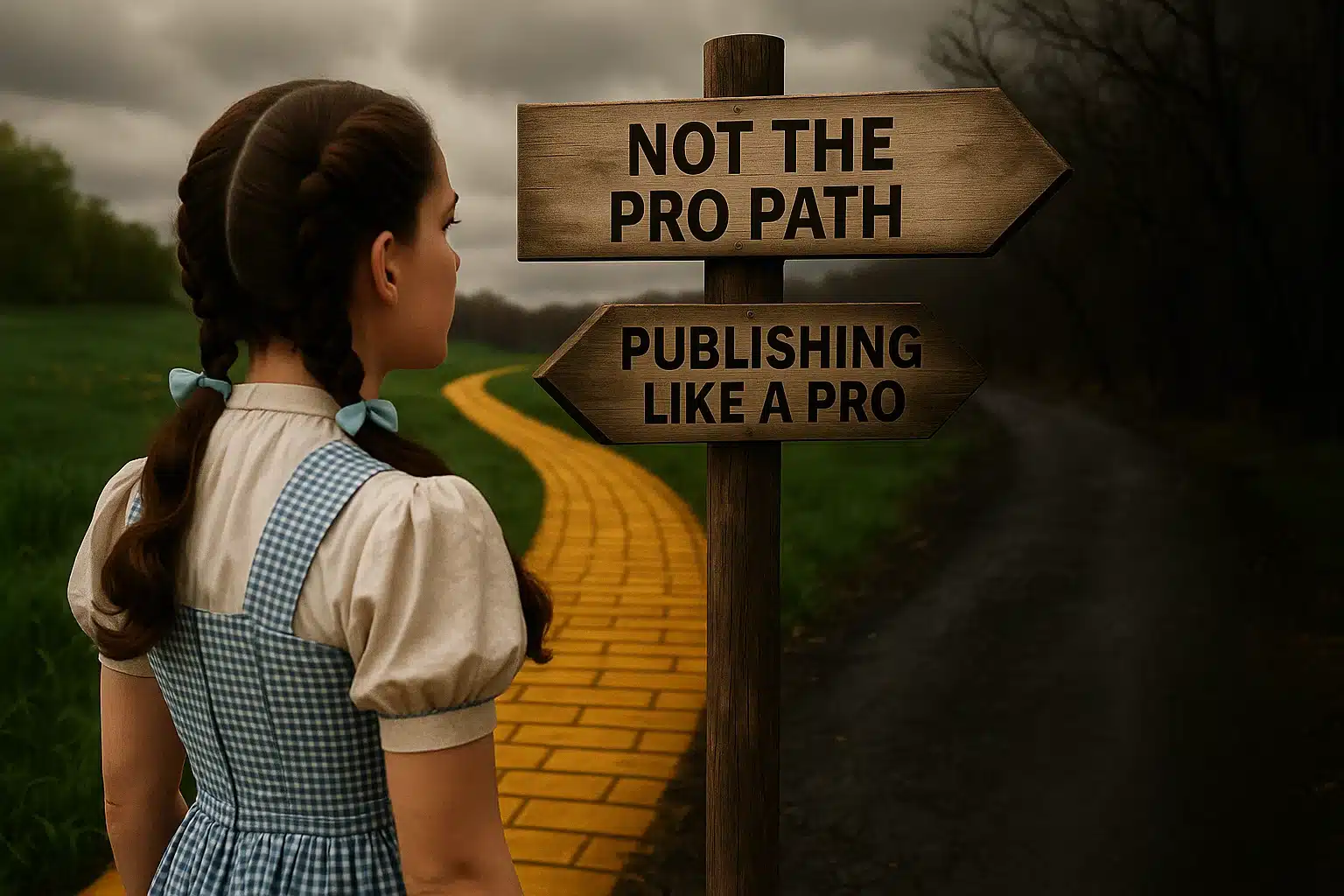
Traditional Publishing: Strategy Over Ego
“Your publishing path should be a strategic decision, not an ego-driven decision.” — Robin Colucci
Robin, who works almost exclusively with traditionally published authors, reminded us that prestige doesn’t always equal profit. Traditional publishing can open doors, but it comes with trade-offs. Longer timelines, smaller royalties, and less flexibility around rights and creative direction are likely.
She also challenged a persistent misconception: that traditional publishers strip authors of creative control.
“People say, ‘You’ll give up your creative control,’ but I’ve almost never seen that happen.” — Robin Colucci
The key, she emphasized, is alignment. Traditional publishing makes sense when your goals, platform, and patience match the process. Otherwise, you may be better served by a more agile path.
Hybrid Publishing: Professional Muscle With Author Control
“A top-flight hybrid publisher should give you the same experience as a traditional press.” — Will Wolfslau
Hybrid publishing bridges the gap between full-service and full-DIY. You invest up front but keep your rights and creative authority. Will described it as a model that “balances the power toward the author.” In most hybrid arrangements, authors earn the majority of royalties and maintain final approval on decisions.
But hybrid publishing still requires a business mindset.
“Nobody should take out a bank loan to finance a book. It’s an uncertain business venture. But if you see it as part of your broader strategy, it can elevate your brand exponentially.” — Will Wolfslau
In short: treat your book like a strategic asset, not a vanity project. Expect mid-five-figure investments when you hire professionals for editing, design, distribution, and marketing. Or as Will put it, “Find the right partner and hire a team.”
Assisted Self-Publishing: Guidance Without Gatekeepers
“Nobody wants a book that looks bad or reads badly. You need a professional team, even if you’re self-publishing.” — Kim Eley
Kim refers to her approach as guided self-publishing. It’s ideal for authors who want to steer the ship but recognize that expertise matters, especially when it comes to editing and design.
“I don’t want to hear, ‘My next-door neighbor is a kindergarten teacher; she’s a great editor.’ No. You want somebody who will, with kindness, tell it like it is.” — Kim Eley
In other words, when you’re clear on your purpose, your audience, and what success looks like beyond the book launch, then making the choice of the right publishing path is a lot easier and more obvious.
Mindset Matters Most
A throughline in every successful publishing story? Humility and focus. Authors who approach publishing as a learning process, rather than a trophy hunt, tend to thrive.
“Your book isn’t for you. It’s for your reader.” — Robin Colucci
That one sentence reframes everything: from how you write and edit, to how you design your cover and market your message.
Kim offered a beautiful reminder:
“You were called to write this book for a reason. Follow that passion, follow that itch, that call that made you want to write in the first place.” — Kim Eley
Let’s Recap: Six Key Takeaways for Choosing Your Path
- Decide strategically, not emotionally. Your publishing model should serve your goals not your ego.
- Budget for value, not vanity. Whether you spend $5,000 or $50,000, align your investment with your long-term vision.
- Get professional editing. No exceptions. A good editor protects both your voice and your credibility.
- Define success early. Know whether your priority is reach, revenue, or reputation.
- Write for your reader. Every decision from structure to marketing flows from understanding who your book is for.
- See your book as the beginning, not the end. Publishing isn’t the finish line it’s the launchpad for your next chapter.
Your voice deserves to be heard in every sense of the word. Whether you’re building a legacy, growing your business, or amplifying a message that matters, the right publishing path helps your voice carry further and last longer.
Join us for next month’s expert panel, where we’ll dive into The Art and Science of Book Cover Design, because your story’s first impression deserves as much intention as the words inside.
About Tina Dietz:
Tina Dietz is a vocal leadership expert and the founder of Twin Flames Studios, pioneers in voice-powered publishing. Her team has produced over 500 audiobooks and podcast-to-book projects, including multiple award winners, bestsellers, and titles featured on major media platforms.
Recognized by Forbes, Inc., ABC, and The Chicago Tribune, Tina and her team craft audiobooks that move people and transform podcasts into books that open doors. Their signature VoiceCraft™ and PodCraft™ Methods help experts, entrepreneurs, and thought leaders turn their voices into platforms for visibility, trust, and lasting impact.


Leave a Reply