

The Art and Science of Book Cover Design: What Really Makes Readers Stop, Look, and Choose Your Book
A book cover is more than packaging. It’s a visual handshake. It’s the promise your book makes before a reader ever sees a single sentence. And as I often remind the authors and publishers who join our monthly panels, we all judge books by their covers. We’re human. We respond to images before ideas.
In November’s Twin Flames Studios expert panel, we brought together three extraordinary voices in book cover design—Claudine Mansour, Maureen Forys, and Sean Qualls—to talk about the art and strategy behind covers that actually sell. What emerged was a conversation about emotion, clarity, competition, and the quiet power of good typography. It was also a reminder that design is not decoration. Design is communication.
And authors deserve covers that communicate well. Read on to discover the insights, quotes, and practical guidance that stood out the most.
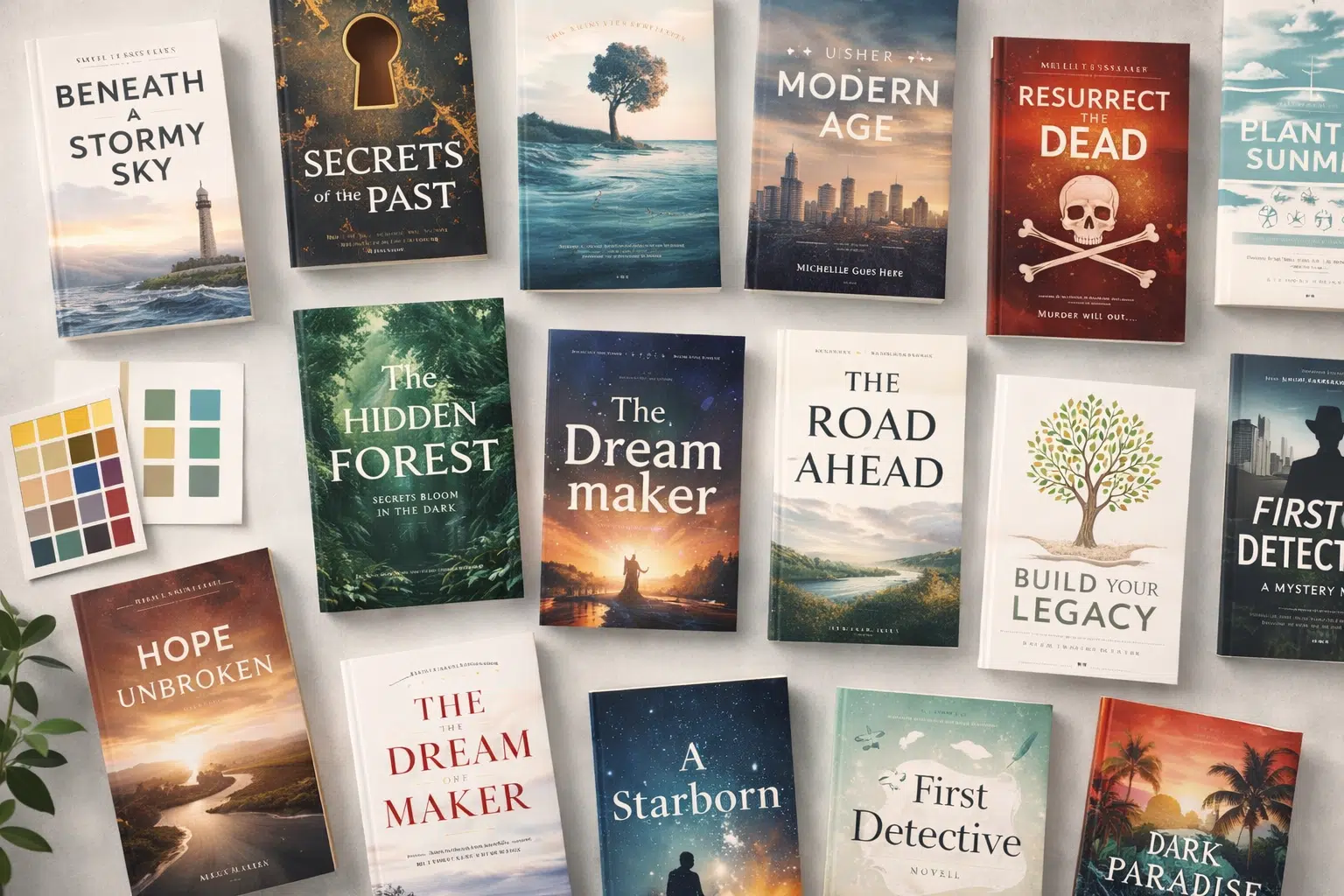
Why Covers Matter More Than Ever
The first thing we asked our panelists was simple: Why does a book cover matter so much today?
Maureen answered without hesitation.
“If you don’t have a strong cover, you’re not going to be seen, especially if you’re an independent author.”
The digital bookshelf isn’t just crowded; it’s noisy. Readers scroll fast, attention is scarce, and an unremarkable cover is essentially camouflage. Claudine expanded the point:
“People these days are inundated with graphic design. If you have a weak book cover, then your marketing ain’t gonna be that great either.”
Readers don’t owe us their attention. A cover earns it.
And it earns something else too: trust.
When your typography, imagery, and tone all align, readers can sense professionalism before reading a single word. That’s the quiet power of design operating on our instincts.
What Readers Respond to (Even If They Can’t Explain Why)
When asked what visual cues tend to attract people, the panelists agreed on one theme: emotion.
Sean put it beautifully:
“There’s something very universal about beauty. It grabs us. That emotional response is key.”
This matters because authors often try to communicate everything on the cover. A whole plot. A full argument. Their life story. Their symbolism.
But readers don’t buy complexity. They buy clarity.
And often, clarity begins with type.
Maureen reminded us that typography is not just the font you choose. It’s the emotional tone of your title. The kerning. The spacing. The weight.
“It needs to be readable from a distance and somehow surprising.”
Claudine added the grounding point at the heart of every great design decision:
“We need to make some sort of connection with the audience. It’s almost always an emotional connection.”
This is how covers work. Feeling first, comprehension second.
How Authors Can Prepare Before Working With a Designer
Here’s the part authors often skip, but shouldn’t.
Before you hand your manuscript to a designer or illustrator, prepare your foundation:
- Know your title
- Know your audience
- Know your competition
- Know your category
Claudine emphasized this with one of my favorite metaphors from the entire panel:
“Designing a book cover is like going to a party. You want to know what the guest list is. You want to know who your competition is.”
If you don’t know the party you’re walking into, you can’t stand out for the right reasons. And as she noted, many first-time authors skip this step entirely.
Maureen also shared that authors rarely come equipped with the vocabulary of design, which is perfectly normal. What helps instead is showing, not telling.She said she often asks authors to go onto Amazon or into a bookstore:
“Tell me what you like and what you don’t like. What speaks to you?”
Designers don’t need you to speak their language.
They need you to speak your taste.
The Dance Between Illustration and Graphic Design
A lot of authors aren’t sure whether they need an illustrator, a designer, or both.
Sean, who has illustrated many well-known covers, offered guidance from his side of the creative table:
“There’s a narrative quality. When you’re trying to convey something about the character and their identity, an illustration can do that really well.”
In other words, illustration is most effective when the cover needs personality or story.
For concept-driven nonfiction or business books, typography can often carry the weight. For memoirs or identity-driven work, illustration may open the emotional door.
Both are valid. Both are powerful. What matters is intention.
The Question Everyone Wants to Ask: Should You Put Your Face on a Memoir?
This came up in the live Q&A, and the answer is the designer’s favorite truth: it depends.Sean offered almost deceivingly simple criteria:
“Is it a good photo?”
Maureen added nuance. Yes, author photos are common, but should they dominate the entire cover? Not always. And I reminded the group that the deeper question is not about ego, but impact:
Is this the emotional doorway that invites the reader in?
That’s the real test.
The Trends Heading Into 2026
We asked the panel what they’re seeing in the market, and three themes emerged:
1. More AI-generated art.
Not always good. Not always bad. But unavoidable. Maureen noted the rapid increase since summer 2024.
2. Busier, more layered covers.
Sean shared that he’s seen more covers with a lot of things going on visually.
3. Type-only covers (especially in nonfiction).
All three agreed: type-only covers can be stunning when executed well.
But as Claudine said, “Is it appropriate? Does it fit in? Does it give the right message?”
Typography is never neutral.
It either supports your message or competes with it.
Let’s Recap: Six Key Takeaways for Choosing Your Path
Here are the biggest lessons from our panel, distilled into clear, actionable guidance:
- Do your competitive research before choosing a cover concept.
Know the “party” you’re walking into. - Collect visual references, not explanations.
Designers can translate taste, not telepathy. - Typography matters more than you think.
It sets tone, clarity, and emotional impact before anything else. - Illustration is powerful when identity or narrative drives the book.
For concept-driven nonfiction, strong type often wins. - Symbolism only works when it communicates beyond your own mind.
If only you understand the metaphor, it’s not a metaphor. - Your cover doesn’t tell the whole story.
It invites the reader into the first chapter of your world.
Each month, we bring together leaders from across the publishing ecosystem to give authors, speakers, and experts real insight into what works in today’s book and visibility landscape.
Join our next live panel on Ghostwriting (with a Dickensian twist)
About Tina Dietz:
Tina Dietz is a vocal leadership expert and the founder of Twin Flames Studios, pioneers in voice-powered publishing. Her team has produced over 500 audiobooks and podcast-to-book projects, including multiple award winners, bestsellers, and titles featured on major media platforms.
Recognized by Forbes, Inc., ABC, and The Chicago Tribune, Tina and her team craft audiobooks that move people and transform podcasts into books that open doors. Their signature VoiceCraft™ and PodCraft™ Methods help experts, entrepreneurs, and thought leaders turn their voices into platforms for visibility, trust, and lasting impact.

Leave a Reply