

Every December, we talk about reflection. What worked? What didn’t? What are we carrying forward?
So when we sat down for our December Expert Panel to talk about ghostwriting, it felt like the right moment to clear the air.
Ghostwriting still carries baggage. Some of it is deserved, most of it is outdated, and nearly all of it is misunderstood.
I work with authors, podcasters, and experts every day who want to write books that matter.
Ghostwriting often enters that conversation quietly and often apologetically, as if it’s a shortcut or a compromise. It isn’t.
What emerged from this panel was a grounded, human picture of what ghostwriting actually looks like today. Our experts—Joscelyn Duffy, Karen Rowe, and Lynne Klippel—uncovered the real glue: collaboration, strategy, trust, and a lot more courage than people expect.
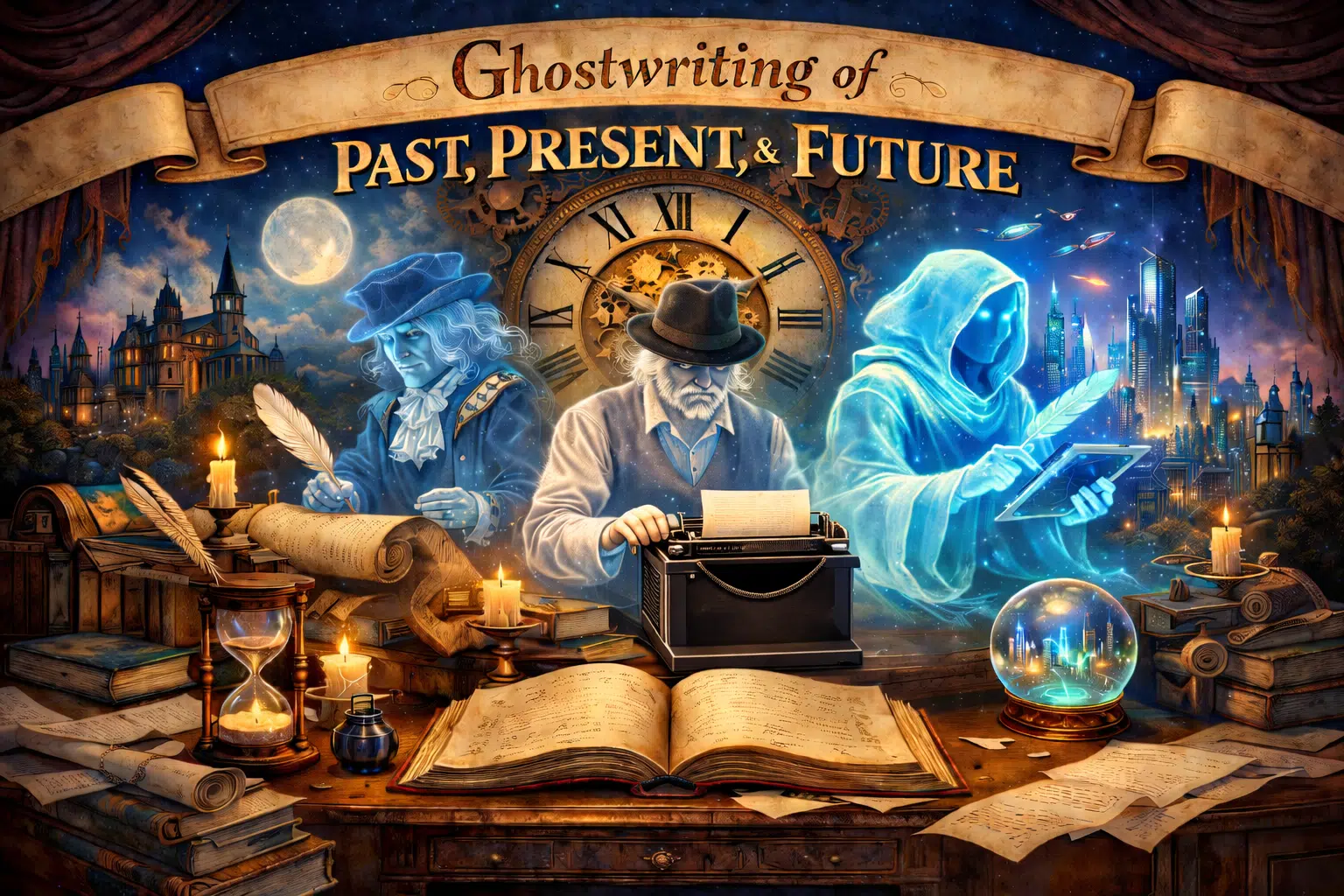
Ghostwriting Past: Retiring the Myths
We started by naming the myths that refuse to die, the first being the elephant in the room.
“The greatest myth is that ghostwriting is taboo. More than half, if not 70 to 90% of books out there (established, bestselling books) are ghostwritten.”
— Joscelyn Duffy
That number surprises people when it really shouldn’t. Ghostwriting has been brought into the mainstream as part of a cultural shift that’s been quietly underway for years.
Another persistent myth is that ghostwriting is a handoff. Notes in. Book out.
“People think they’re going to hand over napkins and notebooks, and we’ll hand them a polished book. That’s not how it works. It’s far more collaborative than that.”
— Karen Rowe
And then there’s the idea that any book is good enough.
“People are busy now. When they read, they want a book that really serves them. A ghostwriter helps find the book that actually matters inside all that content.”
— Lynne Klippel
Publishing has matured. Readers have too.

Ghostwriting Present: What Collaboration Really Looks Like
Once the myths were off the table, the real work came into view.
Modern ghostwriting doesn’t start with writing. It starts with strategy.
“Please don’t just start writing. We start with strategy. Who are you writing for? How are you positioning this book? If we don’t know where we’re going, it’s a long time trying to get there.”
— Joscelyn Duffy
That reframing alone saves authors months of frustration.
From there, the relationship deepens.
This isn’t a transactional relationship. It’s an extended creative partnership. One that often requires honesty, vulnerability, and follow-through.
Karen named something many authors underestimate.
“There’s nothing more frustrating than a client disappearing for months because they got overwhelmed. Responsiveness and commitment make a huge difference.”
— Karen Rowe
Books don’t stall because of talent. They stall because of fear, overload, or lack of clarity.
“At the bottom of all feelings of being stuck is fear. Fear of exposure. Fear of criticism. It’s never really about commas versus semicolons.”
— Lynne Klippel
That insight resonated deeply because we see the same pattern across writing, audio, and visibility work. Being seen is hard. Saying something that matters always is.

Ghostwriting Future: Voice, Technology, and Trust
We couldn’t talk about the future without talking about AI.
The panel’s perspective was refreshingly sober.
“AI can be an ally in the process if you ask the right questions: will this make the book better, and will it make the process more efficient?”
— Joscelyn Duffy
Used thoughtfully, AI can support brainstorming, research, and organization. Used carelessly, it flattens voice and creates cleanup work later.
Which brings us to the question authors ask most.
Will this still sound like me?
“Everybody has what I call a voice print. A ghostwriter learns how to make it sound like you, except if you were a really good writer.”
— Lynne Klippel
Voice isn’t preserved through automation. It’s preserved through listening, feedback, iteration, and restraint.
“Ghostwriting is an extremely selfless profession. It’s not about making the book we would want to write; it’s about honoring what the author wants to say.”
— Joscelyn Duffy
That ethic matters more as publishing accelerates, not less.

Let’s Recap
If you’re considering working with a ghostwriter, here’s what matters most:
- Ghostwriting isn’t cheating; it’s professional collaboration.
- Strategy comes before sentences. Always.
- The relationship shapes the book more than the outline does.
- Getting stuck is normal; fear is part of the process.
- Voice is preserved through care, not shortcuts.
- AI is a tool, not a substitute for thinking.
And one reminder worth repeating:
“No one can read the book that never got written.”
— Karen Rowe
What Comes Next
We host these panels because authors don’t need more noise. They need grounded conversations with people who actually do the work.
If this discussion sparked clarity, curiosity, or a quiet sense of maybe it’s time, I invite you to join us for our upcoming panel: The State of Publishing 2026.
Join us to take a grounded look at the trends, shifts, and surprises shaping the publishing industry in the new year. Learn what’s changing so you can make the smartest decisions about your book, your brand, and your business.
Register for the panel here
Your ideas matter. Your voice matters. And you don’t have to do this alone.
If stepping into audio is on your radar for the year ahead, let’s explore how an audiobook or podcast-to-published book process can support your goals in a practical, strategic way. Let’s Talk.
About Tina Dietz:
Tina Dietz is a vocal leadership expert and the founder of Twin Flames Studios, pioneers in voice-powered publishing. Her team has produced over 500 audiobooks and podcast-to-book projects, including multiple award winners, bestsellers, and titles featured on major media platforms.
Recognized by Forbes, Inc., ABC, and The Chicago Tribune, Tina and her team craft audiobooks that move people and transform podcasts into books that open doors. Their signature VoiceCraft™ and PodCraft™ Methods help experts, entrepreneurs, and thought leaders turn their voices into platforms for visibility, trust, and lasting impact.

Leave a Reply